Fossils, Schools Loans Box - Loan Box Subscription Service
Fossils, Schools Loans Box |
|
|
In the box you will find a collection of original objects to use with your class to help them learn about how fossils are formed and found by provoking conversation and supporting learning in the classroom. The teacher pack contains information about the objects in the box, local history links and suggested activities that will use the objects. Each activity stands alone and can be used independently of the others. The activities and objects in this box can be used to extend the topic beyond the history curriculum. Object ListThis list, from the teacher pack, shows the objects that are included in the Fossils Loans Box. |
|
|
Ammonite 190 – 200 million years old. Ammonites are perhaps the most widely known fossil in the world. They have a distinctive ribbed spiral shell and are easy to spot. The spiral shells are made up of smaller chambers divided by walls which gave buoyancy. The ammonite itself would have lived in the outermost chamber. Whilst most are only a few inches in size, ammonites have been found up to nearly 2 metres in diameter. They went extinct along with the dinosaurs. Ammonites evolved quite rapidly and as they are very common, geologists use ammonites to help determine the age of the layers (or strata) of rock. 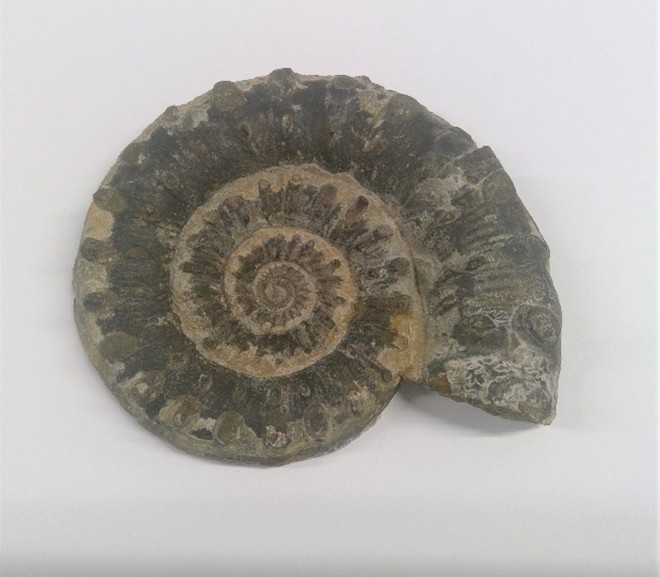 |
|
|
Belemnite 190 – 200 million years old. Belemnites were squid like animals related to modern day squids, cuttlefish and octopi. They had a soft squid-like body but unlike modern squid they had a hard internal skeleton. The tail of this skeleton formed a bullet-shaped feature, which is often referred to as a guard. It is this part of the skeleton that is normally found as a fossil. The guard helped with buoyancy, and the streamlined dart shape meant the belemnite could probably move quite fast in water. 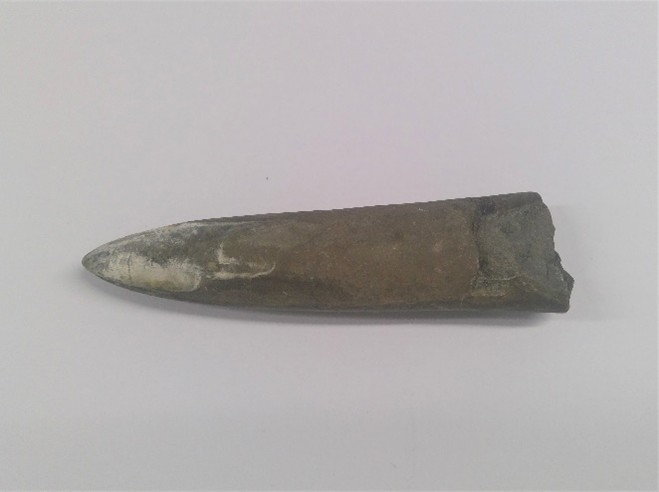
|
|
|
Bivalve 190 – 200 million years old. Bivalves are fossils with two shells which are often the same size and shape, with a hinge that enables the shell to open and close. They belong to the same family of modern-day cockles, mussels, clams and oysters. Bivalves have inhabited the Earth for over 500 million years. They first appeared in the Middle Cambrian, about 300 million years before the dinosaurs. Many closely resemble living forms which helps us to understand how they must have lived. 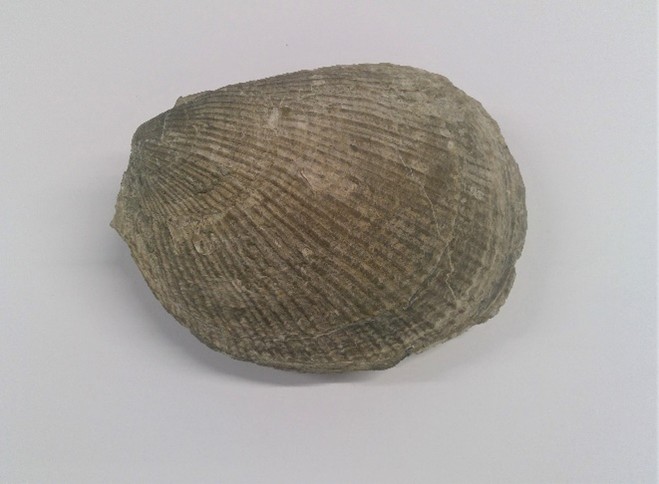
|
|
|
Echinoid 170 million years old. Despite their alien appearance, echinoids or sea urchins are actually very common in our seas today. They were also very common in the past and are quite common fossils. They are part of a much larger group called the Echinoderms which means ‘spiky skins’. Other members of this group include starfish and sea cucumbers. Echinoids have a hard shell (test) covered with small knobs (tubercles) to which spines are attached in living echinoids. The test and spines are the parts normally found as fossils. 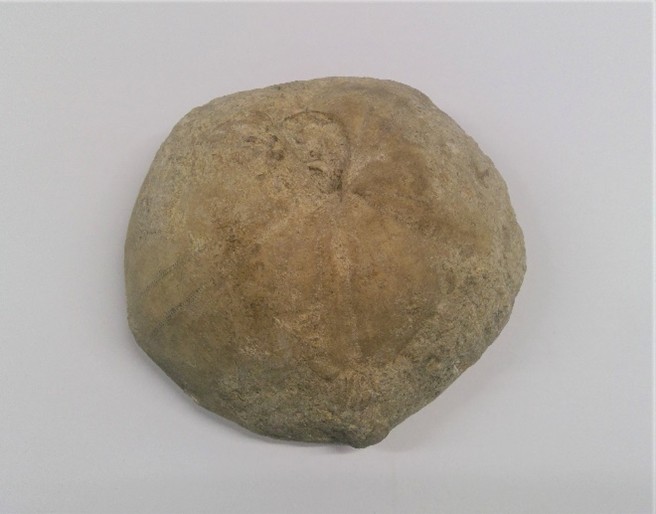
|
|
|
Plesiosaur Vertebra 190 – 200 million years old. This is a backbone from a marine reptile called a plesiosaur, a group of species that lived from around 215 to 65 million years ago. Their size varied from 2 to 15 metres long. They are best known for their long necks and small heads. They would have been fast swimmers and were the predators of the sea, eating other, smaller marine creatures. Though they lived in the sea, they needed to go to the surface to breath and gave birth to live young. Plesiosaurs were not dinosaurs as they did not walk on land, but they did go extinct around the same time as the dinosaurs. 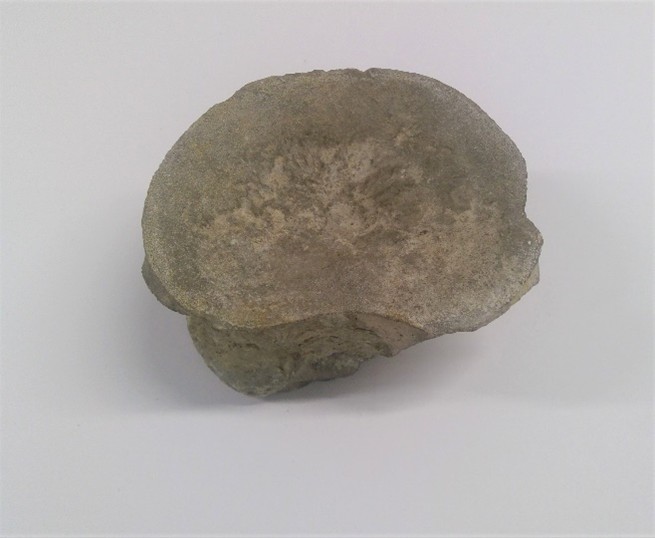
|
|
|
|