Human Evolution, Schools Loans Box - Loan Box Subscription Service
Human Evolution, Schools Loans Box |
|
|
Welcome to this loan box from Heritage Education, part of Heritage and Culture Warwickshire. In the box you will find a collection of replica objects to use with your class to help them learn about human evolution and adaptation, provoke conversation, and support learning in the classroom. This box uses replica skulls of humans and our relatives to look at our fossil record, how our lineage has changed over time and adaptations we have for features like bipedality and intelligence. This information pack also includes links to online resources, additional information on human evolution and ideas for activities using the skulls. Each activity stands alone and can be used independently of the others. The activities and objects in this box can be used to extend the topic beyond the science curriculum Object listThis list, from the teacher pack, shows the objects that are included in the Human Evolution Loans Box. These objects are replicas but are important and valuable accessioned parts of our collections and can still be fragile. Some of these specimens have jaws that are not attached, please handle with care. |
|
|
Chimpanzee (Pan troglodytes) Skull (DETATCHED JAW) This is a replica of the skull of a chimpanzee, the species of living great apes that is most closely related to us. It is estimated that our ancestors split with theirs around 10 million years ago. By looking at this skull, you can see the features that have changed through the evolution of the hominids and what makes us and our ancestors unique. 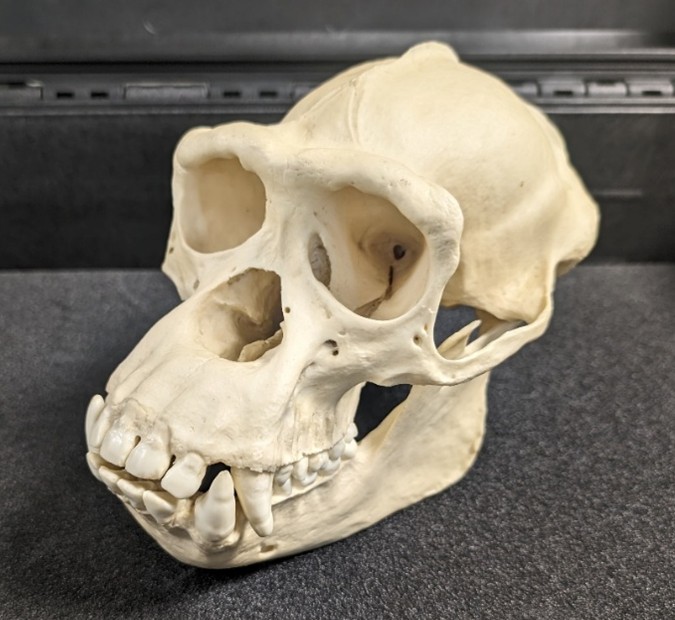
|
|
|
Australopithecus afarensis “Lucy” Skull (DETATCHED JAW) This is a replica of the fossil skull of a human ancestor called Australopithecus afarensis. This species lived in Africa 3.9 to 2.9 million years ago, in a time called the Pliocene. This specimen was found in 1974 in Hadar, Ethiopia, and has been given the nickname “Lucy” by scientists. “Lucy’s” skeleton is 40% complete, which is very rare for such an old fossil, and the preservation of her pelvis and leg bones means we can tell she was able to walk upright like us. This is called bipedalism and is one of the key features that makes humans different from other animals. However, her arm bones show that her arms were longer than those of modern humans, but shorter than those of chimpanzees. A. afarensis probably spent time walking between forested areas and then climbing and foraging from trees. 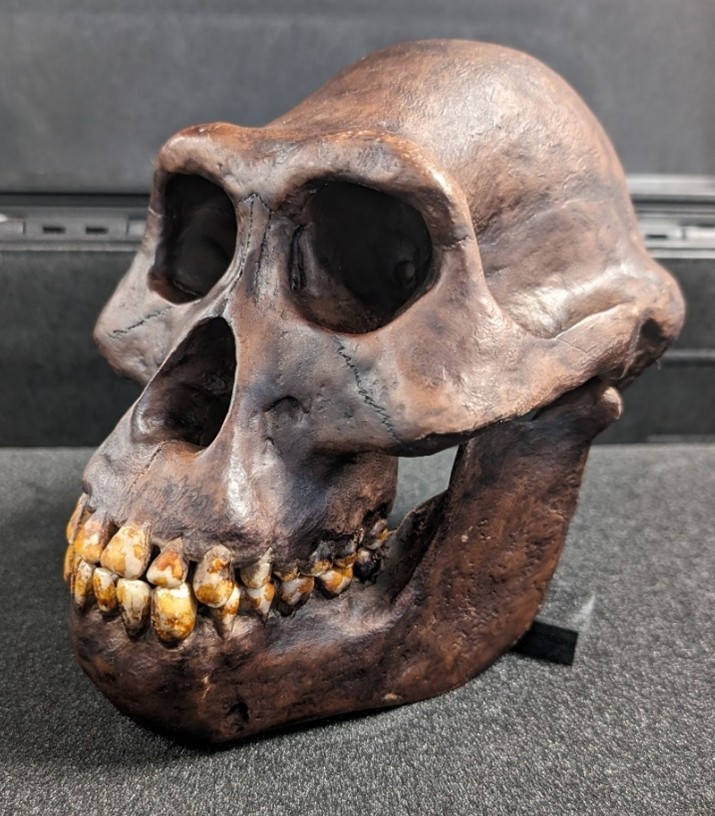
|
|
|
Homo heidelbergensis Skull This is a replica of the fossil skull of a human ancestor called Homo heidelbergensis which lived 700 thousand to 200 thousand years ago across Europe. Of all our ancestors in the genus Homo, H. heidelbergensis is likely the most closely related to us and is the last common ancestor between modern humans and Neanderthals. H. heidelbergensis is also the earliest human ancestor we have evidence of in the UK, including here in Warwickshire, with the Bubbenhall hand axe being dated to 500 thousand years old, and likely made by H. heidelbergensis (See later in this pack for more information). This find, as well as others in the UK, show that early people were making stone tools, hunting, and butchering large animals, so already quite similar to modern humans. 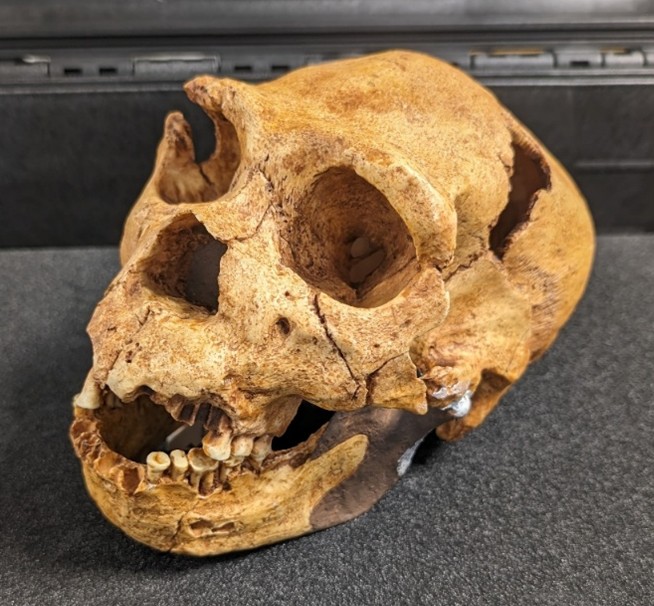
|
|
|
Homo sapiens Human Skull This is a replica of a modern human skull. Modern humans first evolved in Africa around 300 thousand years ago. Over the next 250 thousand years they began to move out of Africa and across the world. The first evidence of modern humans in the UK is remains found in Kent’s Cavern, Devon which are dated to 41–44 thousand years old. However, the UK was too cold for people to live here through the Ice Ages, so there wasn’t a permanent population of people here until 12 thousand years ago. Our scientific name is Homo sapiens, which means we’re in the genus Homo, and more closely related to Homo heidelbergensis than Australopithecus afarensis. 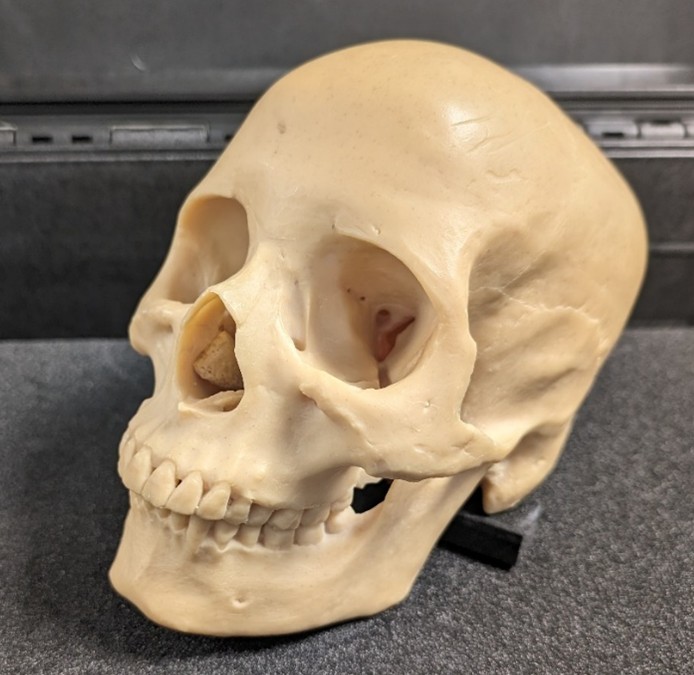
|
|
|
|