Stone Age Box 1, Schools Loans Box - Loan Box Subscription Service
Stone Age Box 1, Schools Loans Box |
|
|
In the box you will find a collection of replica and original objects to use with your class to help them learn about life in the Stone, Bronze and Iron ages, provoke conversation and support learning in the classroom. The teacher pack contains information about the objects in the box, local history links and suggested activities that will use the objects. Each activity stands alone and can be used independently of the others. The activities and objects in this box can be used to extend the topic beyond the history curriculum. Object ListThis list, from the teacher pack, shows the objects that are included in the Stone Age Loans Box 1. |
|
|
Three flint flakes and blades Flint could be struck to make small thin flakes using a hard stone. In the Mesolithic period (8000 BC to 4000 BC), when people hunted animals and gathered nuts and plants, the flakes would be shaped to make knives and arrowheads. When a few of them are fixed into a shaft of wood they would make a good harpoon type spear used for hunting animals. This object should remain in the clear box and not be handled to preserve it. 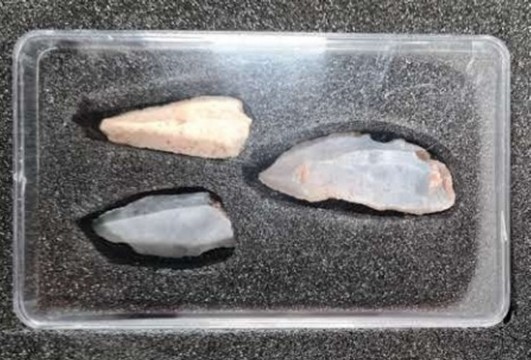
|
|
|
A foliate, leaf shaped, arrowhead In the Neolithic period (4000 BC – 2200 BC), people had begun to farm animals and grow crops. They still hunted, but it was only a small part of their diet. Flint was shaped into arrowheads like this one, which is in the shape of a leaf. These were fixed to a wooden shaft and then fired from a wooden long bow. This object should remain in the clear box and not be handled to preserve it. 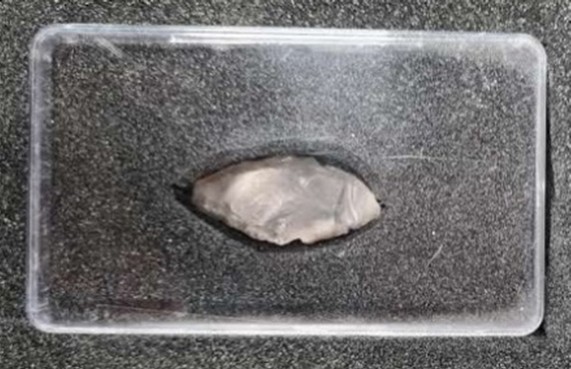
|
|
|
Flint scraper Flint was used a lot because it has a very sharp edge, but there were some tools that needed a blunt edge. This is a scraper, it was used to remove the fatty tissue from the inside of an animal skin as it was being prepared to make leather for cloths and containers. The edge (along the bottom of the picture) is steep and blunt rather than thin and sharp. 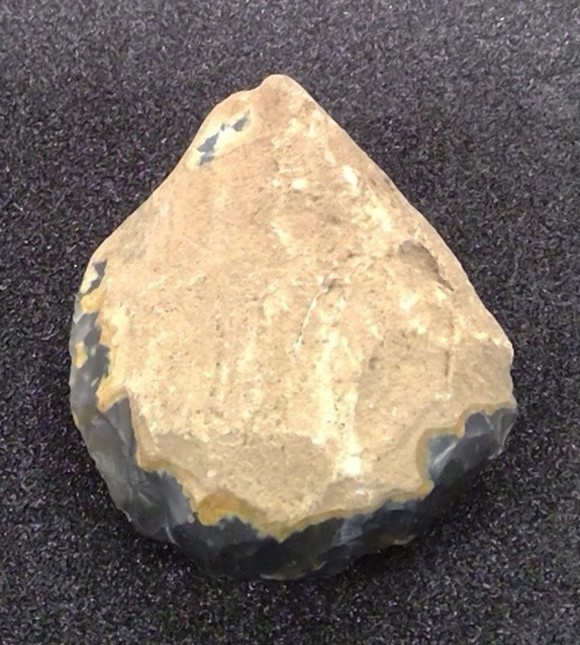
|
|
|
Stone Age flint hand axe This handaxe is made of flint and was used in the Palaeolithic period, around 200,000 to 10,000 years ago. As its name suggests it was held in the hand, rather than hafted in a wooden handle. The people who used handaxes were scavengers, not hunters, so they would use the handaxes to break open the bones of an animal to get to the valuable meat. 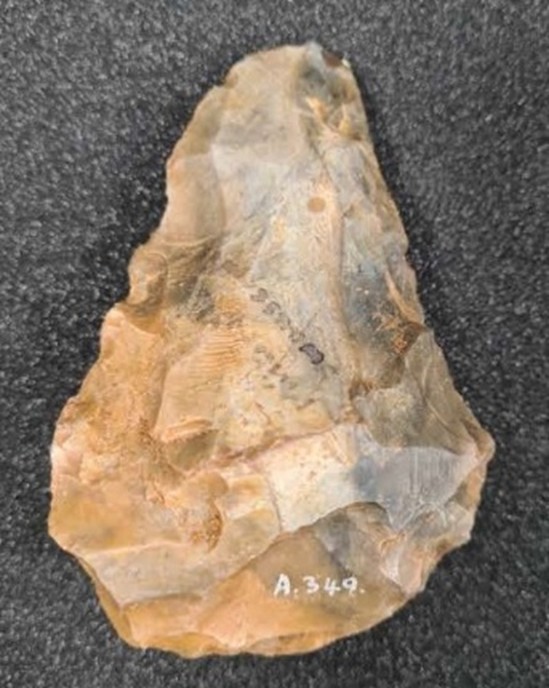
|
|
|
Fragment of iron age loom weight This object is quite crumbly because it was not fired at a high temperature unlike most pottery containers. This is a triangular loomweight from the Iron Age (800 BC – AD 43), it had holes in the sides for the threads. Loomweights were used to weigh down the vertical threads (warp threads) on a loom. There would have been a line of these loomweights at the bottom of the loom frame, they made it easier to weave the horizontal threads (weft threads) through the warp threads to make the cloth. 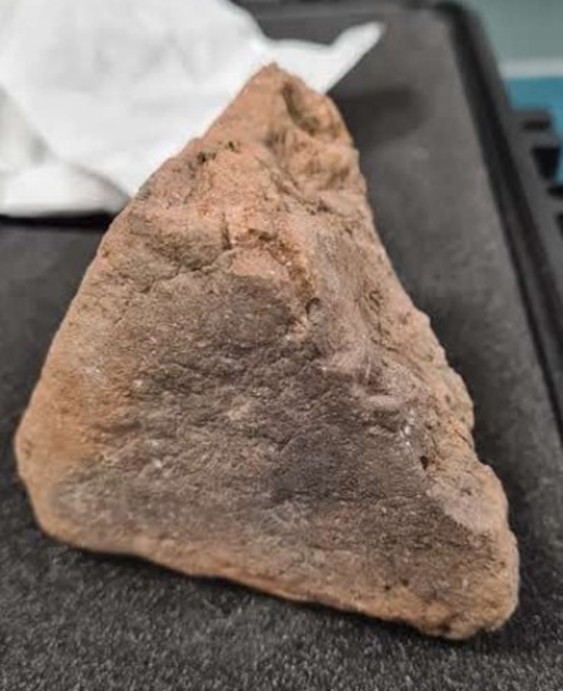
|
|
|
Bronze Age bronze axe head This axe is made of bronze which is a mix or alloy of copper and tin, it was cast into this shape using a mould. Copper and bronze tools were introduced into Britain from Continental Europe around 2200 BC and flint and stone tools were quickly replaced with metal ones. This object should remain in the clear box and not be handled to preserve it. 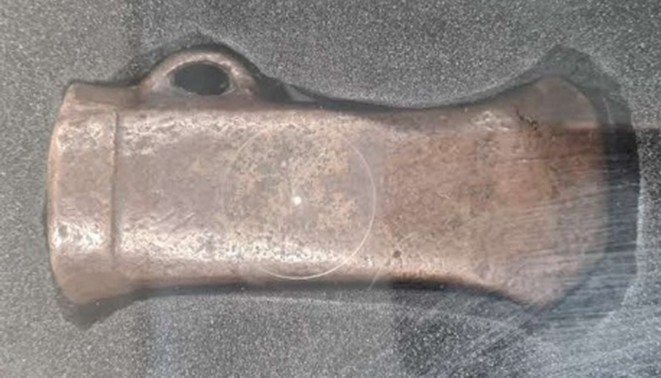
|
|
|
|