Stone Age Flora and Fauna, Schools Loans Box - Loan Box Subscription Service
Stone Age Flora and Fauna, Schools Loans Box |
|
|
In the box you will find a collection of replica and original objects to use with your class to help them learn about the animals Stone Age people encountered, provoke conversation and support learning in the classroom. The teacher pack contains information about the objects in the box, local history links and suggested activities that will use the objects. Each activity stands alone and can be used independently of the others. The activities and objects in this box can be used to extend the topic beyond the history curriculum. Object ListThis list, from the teacher pack, shows the objects that are included in the Stone Age Flora and Fauna Loans Box. |
|
|
Cow or bison horn core, from the River Alne, South Warwickshire. Pre-historic cave paintings show us that prehistoric people hunted bison in Europe. European bison still exist and nearly became extinct in the 1920s. 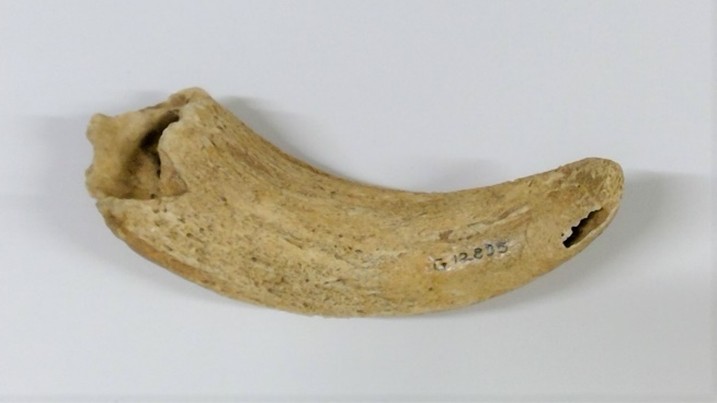
|
|
|
Cow or bison molar tooth, location unknown. It is difficult to tell the difference between cow and bison remains. The wild Ox are the ancestors of our domesticated cows. Early neolithic farmers started the domestication of animals. 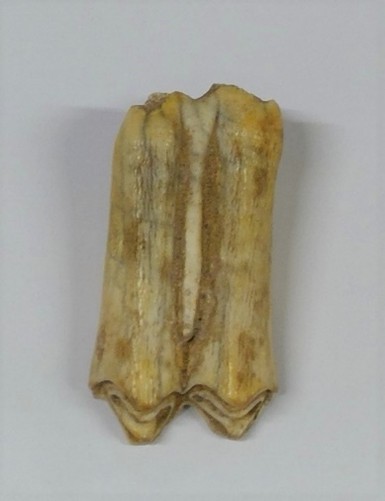
|
|
|
Horse molar tooth, from Bishops Itchington. When the horse first became domesticated is disputed. Evidence in the Bronze Age shows the beginnings of domestication. Certainly by the Iron Age horses were being used as working animals and for transport. Horses seen in Stone Age cave paintings were probably being hunted and eaten by stone age people. Horses at this time would have resembled the Przewalski's horse (Wikipedia) . 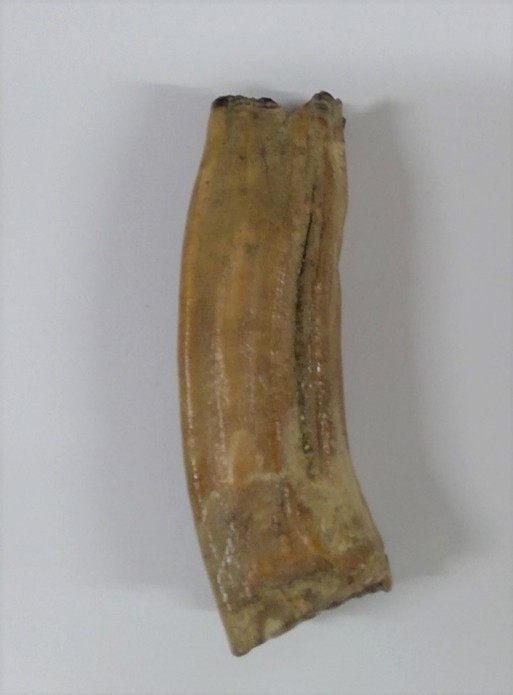
|
|
|
Hyaena jaw, Wookey Hole caves from, Somerset This is probably from a species of prehistoric hyaena now extinct. Their fossil remains have been found across Europe. Similar to modern day hyaena’s they would have hunted and been hunted by Stone Age people. 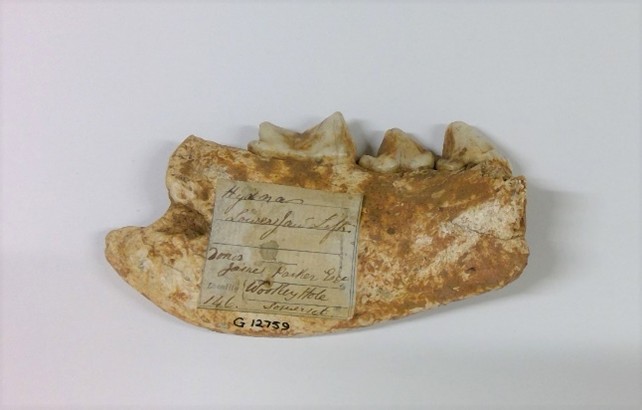
|
|
|
Mammoth molar tooth from Stratford-upon-Avon There were many species of pre historic mammoth, including the wooly mammoth. We can’t say which species of mammoth this tooth comes from. Mammoths are the ancestor of modern elephant species. Evidence shows mammoths were hunted by Stone Age people. They would have found use for all parts of the animal, it’s meat, skin, bones, tusks, muscles. Bones and tusks were used for making art, tools, and dwellings. 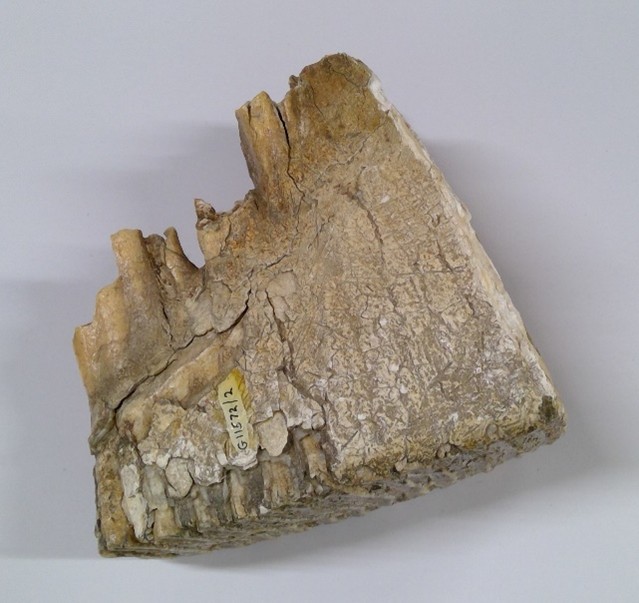
|
|
|
Red deer antler, from Fulbrooke Red deer lived across Europe in the Stone Age. They were hunted for meat, antlers and bones. The bones and antlers were soft enough to be carved into tools and art. Evidence show antlers being used as handles for stone tools. Bones carved to make needles and the shoulder blades used as digging tools. 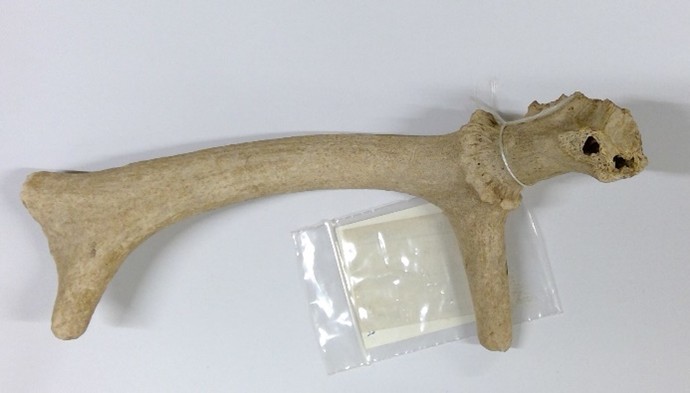
|
|
|
Hand axe, from Swanscombe, Kent This handaxe is made of flint and was used in the Palaeolithic period, around 200,000 to 10,000 years ago. As its name suggests it was held in the hand, rather than hafted in a wooden handle. The people who used handaxes were scavengers, not hunters, so they would use the handaxes to break open the bones of an animal to get to the valuable meat. 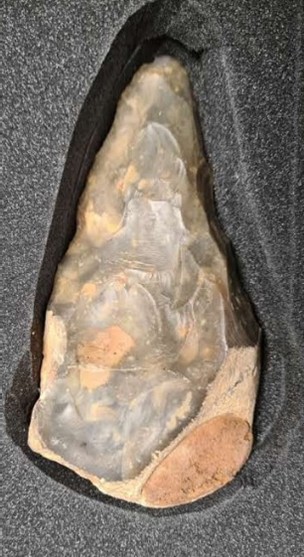
|
|
|
|